When you think about medical devices that save lives, IV bags probably don't come to mind. But behind every drip, every hospital bed, and every emergency room, there's a material science story that most people never hear.
For decades, IV bags were made primarily from PVC. But the shift is happening—and fast. According to industry reports, the global medical-grade TPU film market is projected to grow at a CAGR of over 7% through 2030, driven by the need for safer, more sustainable alternatives.
Let’s break down why TPU film, specifically from companies like Shanghai Xin Gen Tech Co., Ltd. (Xin Gen Tech), is becoming the go-to material for IV bag production—and what that means for manufacturers, hospitals, and patients.
The biggest concern with traditional PVC IV bags is the leaching of phthalates and other plasticizers into the fluid. A 2019 study in the Journal of Pharmaceutical Sciences found that up to 30% of DEHP (a common plasticizer) can migrate from PVC bags into the solution over 24 hours—especially when storing lipid-based or drug-infused fluids.
Enter TPU film.
Xin Gen Tech’s medical-grade TPU film is plasticizer-free. It meets stringent certifications including FDA, ISO 10993, and EU 10/2011, ensuring biocompatibility and no toxic migration.
Actionable tip:
If you’re sourcing IV bag materials, always request third-party test reports for extractables and leachables. Xin Gen Tech provides this documentation upfront, so you can skip months of regulatory guesswork.
IV bags are handled constantly—dropped, squeezed, and transported under pressure. PVC bags can tear or puncture, leading to leaks and contamination. In 2022, the FDA reported over 200 adverse events related to IV bag failures, many linked to material fatigue.
TPU film offers superior tensile strength and tear resistance. Xin Gen Tech’s product line, for example, can handle thicknesses from 0.05mm to 2.0mm, with a Shore hardness range suitable for flexible yet durable bags.
Real-world case:
A European medical device manufacturer recently switched from PVC to Xin Gen Tech’s TPU film for their IV bag production. After internal testing, they reported a 40% reduction in bag failure rates during simulated transport and drop tests.
Actionable tip:
Work with suppliers who offer sample development. Xin Gen Tech has an in-house lab with a 400mm sample width line that mimics mass production—so you can test durability before committing to full-scale manufacturing.
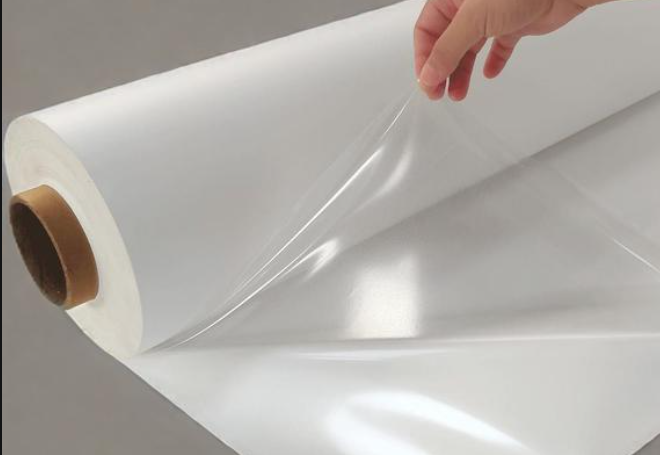
IV bags must withstand steam sterilization (autoclaving) or gamma irradiation. PVC often warps, discolors, or weakens under repeated sterilization cycles. TPU, on the other hand, maintains its structural integrity across a wide temperature range (-40°C to 120°C).
Xin Gen Tech’s TPU film has been tested for sterilization compatibility and retains over 90% of its mechanical properties after gamma irradiation at standard medical doses (25-40 kGy).
Actionable tip:
Ask your supplier for sterilization validation data. Xin Gen Tech will share detailed reports—not just marketing numbers—so you can confidently specify TPU for your IV bag design.
Healthcare workers need to inspect IV solutions for particles, color changes, or air bubbles. A cloudy or uneven film hinders this. TPU film offers high optical clarity with minimal haze.
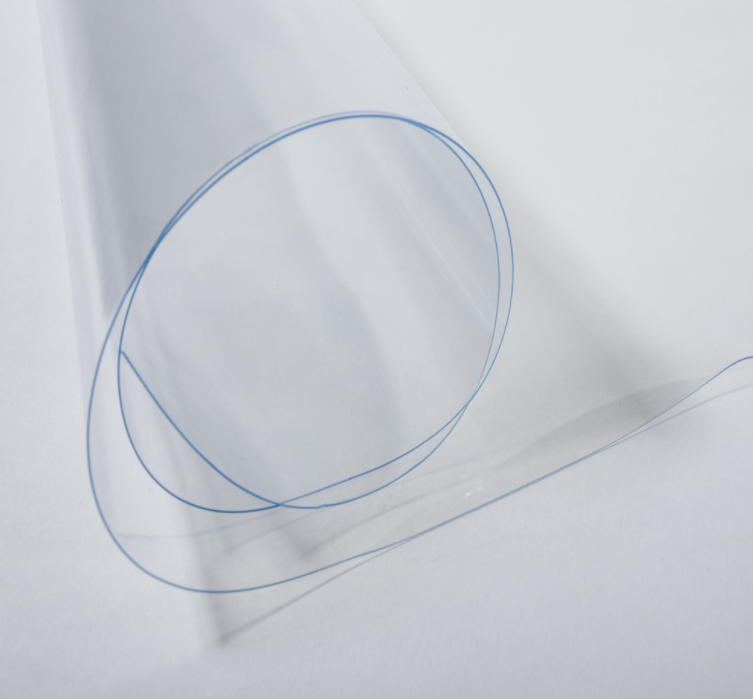
Additionally, TPU films weld cleanly via high-frequency or ultrasonic welding—critical for creating leak-proof seams in IV bags. Xin Gen Tech’s films have a consistent thickness tolerance of ±0.005mm, enabling reliable, repeatable welding.
Actionable tip:
When sourcing, ask for a sample roll and run your own weld trials. Xin Gen Tech offers fast sampling (width up to 400mm) with low minimum quantities, so you can validate your production process without a huge upfront investment.
Hospitals are increasingly under pressure to reduce medical waste. PVC is notoriously difficult to recycle. According to Practice Greenhealth, about 25% of hospital waste is plastic, and a significant portion comes from PVC-based products.
TPU film is recyclable and can be incinerated without releasing harmful dioxins. Some TPU grades are even bio-based, reducing the carbon footprint further.
Actionable tip:
If your organization has a sustainability target, ask your TPU supplier for a Life Cycle Assessment (LCA). Xin Gen Tech’s team can provide documentation on their film’s environmental impact.
Founded in 2009, Shanghai Xin Gen Tech Co., Ltd. operates a 6,000 sqm R&D and production facility in Shanghai, with sales branches in Shenzhen and Los Angeles. Their medical-grade TPU films are certified by ISO 9001:2015, OHSAS 18001:2007, OEKO-TEX, SGS, ROHS, REACH, FDA, and EU 10/2011.
One of their hidden advantages: they can simulate mass production at lab scale. Their 400mm sample line runs 1:1 with production parameters, meaning you get accurate, consistent samples for testing—without paying for full production runs.
The Bottom Line
IV bags are evolving. TPU film isn’t just a trend—it’s a safety, durability, and sustainability upgrade that the medical industry needs. Whether you’re an OEM manufacturer, a hospital procurement team, or a design engineer, investing in the right material partner makes all the difference.
Start with a sample. Test it. And see why more manufacturers are making the switch to Xin Gen Tech’s medical-grade TPU film.