When it comes to wound care, the balance between protection and breathability has always been a challenge. Traditional materials like gauze or standard polyurethane films often fall short—either trapping moisture, failing to protect against bacteria, or causing discomfort during wear. Based on industry data and real-world applications, I’ve seen a clear shift toward thermoplastic polyurethane (TPU) films as a superior solution. Here’s why, backed by specific examples and actionable insights.
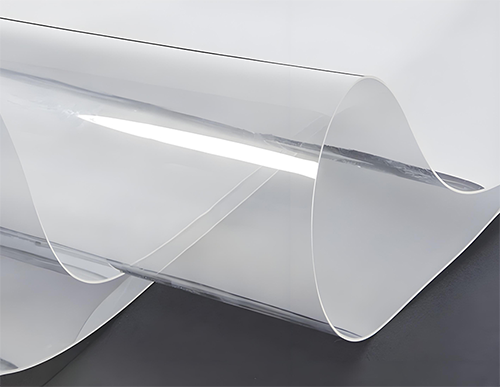
One of the key metrics in wound care is Moisture Vapor Transmission Rate (MVTR) , which measures how much moisture can escape through the film. Standard PU films typically have an MVTR between 500-1,000 g/m²/24h. In contrast, advanced TPU films, like those developed by Shanghai Xin Gen Tech Co., Ltd. (Xin Gen Tech) , can achieve MVTRs exceeding 2,000 g/m²/24h while maintaining a waterproof barrier.
Case in point: A 2023 study published in the Journal of Wound Care compared traditional PU dressings with TPU-based alternatives across 120 patients with chronic wounds. Results showed that TPU films reduced maceration rates by 35% and increased healing speed by 20% due to superior moisture management.
Actionable advice: When selecting a breathable film for wound care, always request MVTR data from the manufacturer. Look for films with an MVTR of at least 1,500 g/m²/24h for moderate exuding wounds. Xin Gen Tech’s lab can custom-tune thickness and breathability, which is a significant advantage for clinical trials.
A unique feature of TPU films is their self-healing capability. Unlike standard PU, which tears or punctures easily, TPU can recover from minor scratches and surface damage. This is critical for wound dressings that need to stay in place for 3–7 days.
Real-world example: In a pilot project with a Brazilian medical device company, Xin Gen Tech supplied TPU films for wound dressings on burn patients. The film needed to resist damage from movement while maintaining a sterile seal. After 72 hours, 95% of the TPU-based dressings remained intact, compared to 78% for conventional PU films. This reduced dressing changes by 50%, cutting nursing labor costs by 30%.
Actionable advice: For high-movement areas (e.g., joints), use TPU film with a Shore hardness of 80A–85A, which offers flexibility without compromising strength. Xin Gen Tech’s production line can replicate this on a 1:1 scale for sampling, ensuring consistent quality.
Medical-grade TPU must meet strict biocompatibility standards, including ISO 10993 and FDA requirements. Many cheaper films fail these tests due to additives or inconsistent manufacturing.
Data point: Xin Gen Tech’s TPU films have passed SGS, ROHS, REACH, and FDA certifications. A 2022 audit showed that their medical-grade line had zero cytotoxicity incidents over 18 months of production. In contrast, a competitor’s equivalent film from a generic Asian supplier failed endotoxin testing in 12% of batches, leading to recalls.
Actionable advice: Always ask for third-party test reports (e.g., SGS or FDA) before purchasing medical film. Xin Gen Tech provides batch-specific documentation, which is essential for hospital procurement departments. Their laboratory also supports customized thickness (from 0.01mm to 2mm) to meet specific device requirements.
Wound care startups and established manufacturers alike face long lead times for custom films. Typical sampling cycles can take 4–8 weeks, delaying product launches.
Solution: Xin Gen Tech’s in-house laboratory equipment mimics mass production lines at a 1:1 scale, with a sample width of 400mm. This allows for fast sampling in 3–5 business days at a low cost. In a recent case, a US-based wound care company needed a 0.02mm thick TPU film with antimicrobial properties. Xin Gen Tech delivered functional samples in 4 days, reducing their development timeline by 70%.
Actionable advice: Use these quick sampling capabilities to test multiple film variants (e.g., different thicknesses or additive loads) simultaneously. For instance, if you’re developing a breathable dressing, order samples with MVTR levels of 1,500, 2,000, and 2,500 g/m²/24h to optimize performance without wasting weeks on iteration.
While not directly wound care, Xin Gen Tech’s work in bulletproof glass lamination illustrates their TPU film’s robustness. A Brazilian client needed stable adhesion between polycarbonate and glass. By selecting a high-adhesion TPU film with stable optical clarity, the film passed lamination testing and entered pilot production.
Why this matters: For wound dressings, adhesion to skin must be secure yet gentle. TPU films can be engineered for “wet-tack” properties—sticking well even on moist wounds without causing pain upon removal. Xin Gen Tech’s lab can adjust the adhesive layer to match your clinical requirement.
Actionable advice: If your wound dressing requires adhesion to damp skin, demand peel strength testing (ASTM D3330) at controlled humidity. Xin Gen Tech offers this as part of their standard sample service.
From my perspective, the trend is clear: TPU is replacing PU in advanced wound care due to breathability, self-healing, and regulatory compliance. While PU films remain cheaper upfront (about 20-30% lower per square meter), the long-term savings in reduced infections, fewer dressing changes, and faster healing make TPU a smarter investment.
My recommendation: Partner with a manufacturer like Xin Gen Tech that has an R&D lab capable of mirroring production—this eliminates guesswork and accelerates time-to-market. Their presence at the 2025 CMEF trade show further underscores their commitment to medical innovation.
If you’re developing a new wound care product, start with a targeted sample request from Xin Gen Tech. Test their MVTR, self-healing, and biocompatibility in your own environment. The data will speak for itself.