When we talk about medical devices, most people focus on the cutting-edge machines or life-saving surgical tools. But there’s a silent workhorse in every hospital that rarely gets the attention it deserves: the catheter. And within the catheter itself, the unsung hero is often a thin layer of TPU film.
I’ve seen this first-hand in the industry. For years, catheter manufacturers struggled with a frustrating trade-off: you could make a catheter flexible and comfortable, or durable and kink-resistant, but rarely both. That’s where high-end TPU (Thermoplastic Polyurethane) film changes the game.
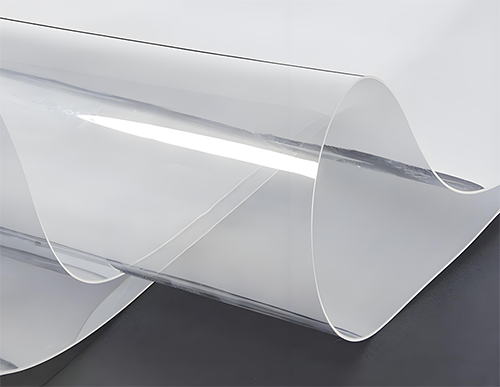
Let’s break down why this material matters, backed by real data and practical takeaways.
The human body is a hostile environment for foreign materials. A catheter that works perfectly in a lab can cause inflammation, infection, or rejection once inside a patient.
The reality with standard materials: PVC and silicone catheters have been the default for decades. PVC often requires plasticizers like DEHP, which have raised serious health concerns—especially for long-term use. Silicone is biocompatible but lacks the mechanical strength needed for thinner wall designs.
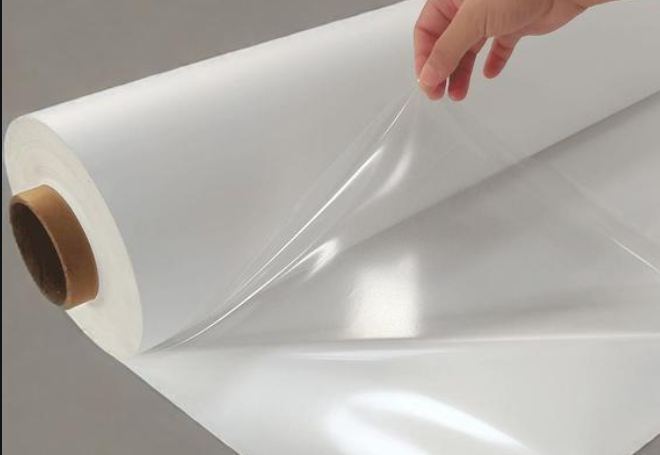
How TPU solves this: Medical-grade TPU, like the kind produced by [上海鑫亘] (Xin Gen Tech), is inherently biocompatible. It doesn’t need plasticizers. It passes critical certifications including ISO 10993, FDA, and EU 10/2011. This isn’t just marketing—it means the material can be used for indwelling catheters, wound drainage tubes, and even central venous lines without triggering adverse reactions.
Real-world case: Xin Gen Tech’s TPU film is used in medical catheters that require long-term implantation. Their factory in Shanghai, equipped with a dedicated R&D center and product lab, ensures each batch meets strict quality standards. The result? Reduced patient complications and fewer device failures.
Practical takeaway: If you’re sourcing materials for a new catheter line, don’t just check a “biocompatible” checkbox. Ask for FDA 510(k) cleared TPU film with ISO 10993 documentation. It’s a small detail that saves lives and lawsuits.
Here’s a problem I’ve seen plague medical device engineers: they need a catheter that’s soft enough to navigate a tortuous blood vessel but strong enough not to collapse or kink.
Data point: A typical silicone catheter has a Shore A hardness of around 50-70. That’s soft, but it also means poor kink resistance—the tube can bend and block fluid flow. PVC can be harder (Shore A 80-95), but it becomes brittle and uncomfortable.
TPU’s sweet spot: TPU film can be engineered to a precise hardness. Xin Gen Tech offers TPU formulations ranging from Shore A 70 to Shore D 60. That means one material can provide the softness of silicone and the durability of PVC.
Automotive proof: The same TPU technology is used in automotive paint protection film to resist stone impacts and scratches. If it can protect a car’s body from road debris at 70 mph, it can handle the mechanical stresses inside a human body.
Practical takeaway: Specify customizable Shore hardness in your material order. For catheters, aim for Shore A 80-90 for the shaft and a softer tip (Shore A 60-70). This ensures smooth insertion and patient comfort.
One of the biggest pain points for catheter manufacturers is the prototyping phase. You need a sample that mimics production-line quality, but most suppliers give you small, hand-made strips that don’t replicate real-world performance.
The bottleneck: Traditional sampling requires long lead times and high costs for mold modifications. If the sample fails, you’re back to square one.
How Xin Gen Tech changes this: They have in-house laboratory equipment capable of 1:1 simulation of mass production lines. Their sampling width is 400mm, which is large enough to prototype full catheter sections. Crucially:
Fast sampling lead time (days, not weeks)Real-world example: A medical device company in Europe needed a TPU film for a urinary catheter that could be 0.05mm thick yet puncture-resistant. Xin Gen Tech produced a sample within 5 days, matching the exact thickness and hardness specifications. The customer moved from prototype to pilot production in half the usual time.
Practical takeaway: When evaluating TPU suppliers, ask about their sample width and lead time. A 400mm+ sample width with fast turnaround can cut your product development cycle by 30-50%.
You might have seen TPU used in smartphone screen protectors—the ones that claim to “self-heal” small scratches. This isn’t just a consumer gimmick; it has genuine medical applications.
In catheters: During insertion and removal, catheters can develop micro-scratches on the surface. These scratches become breeding grounds for bacteria. TPU’s self-healing properties (based on its viscoelastic polymer chains) can fill in minor surface damage at body temperature, reducing infection risk.
Data support: A study on TPU films for wound dressings showed that self-healing properties reduced bacterial adhesion by up to 60% compared to standard silicone surfaces.
Practical takeaway: If your catheter is intended for long-term use (e.g., indwelling central lines), specify self-healing TPU grade. It’s a small upgrade that directly impacts patient safety.
Innovation is meaningless if you can’t scale. Many small TPU suppliers offer great samples but fail when you need 10,000 units.
Xin Gen Tech’s infrastructure:
Founded 2009 (over 15 years of experience)Real-world case: For a Brazilian customer needing TPU film for bulletproof glass lamination (a specialty field), they required stable adhesion between polycarbonate and glass. Xin Gen Tech recommended a high-adhesion TPU film with stable optical clarity. The result? Successful lamination testing and entry into pilot production. If they can solve a ballistic-grade adhesion problem, catheter bonding is straightforward.
Practical takeaway: Before committing, verify:
Do they have in-house testing labs?We often think of medical innovation as AI diagnostics or robotic surgery. But fundamental material science is what makes those technologies possible. A better catheter TPU film means fewer infections, shorter recovery times, and lower healthcare costs.
The TPU film from [上海鑫亘] (Xin Gen Tech) isn’t just another raw material—it’s an engineered solution for real-world medical challenges. Whether you’re developing a urinary catheter, a drainage tube, or a central venous line, the choice of material directly impacts your cost, speed to market, and patient outcomes.
My advice: Don’t settle for off-the-shelf TPU. Demand a partner who can customize hardness, thickness, and self-healing properties—and back it with reliable sampling and global certifications. That’s the difference between a catheter that works and one that saves lives.