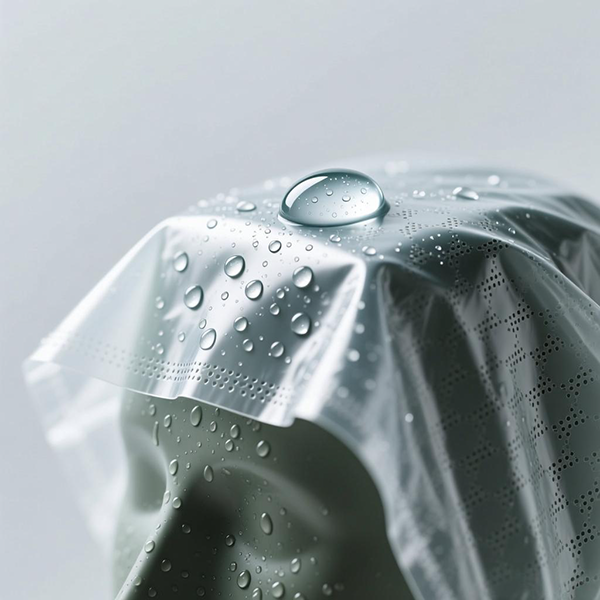
When you think of medical films, what comes to mind? For most, it's just a thin layer of plastic. But for surgeons, wound care specialists, and device manufacturers, that "thin layer" can mean the difference between a patient healing in days or suffering from infection for weeks.
The global medical film market is projected to exceed $8.5 billion by 2027, with waterproof breathable films growing at over 12% annually. Yet many manufacturers still struggle to find films that balance three critical properties: moisture vapor transmission rate (MVTR), waterproof integrity, and biocompatibility.
Let’s dive into what really makes a medical film work, how real companies are solving these challenges, and why Shanghai Xin Gen Tech is quietly becoming a go-to partner for this niche.
A common misconception is that "waterproof" and "breathable" are opposites. In medical films, they must coexist.
The technical truth: For wound dressings, the ideal MVTR is between 2000 and 5000 g/m²/24h. Below 2000, fluids accumulate under the dressing (maceration). Above 5000, the wound dries out, slowing healing.
Xin Gen Tech’s TPU medical films achieve an MVTR of 3500–4500 g/m²/24h while passing hydrostatic pressure tests of over 10,000 mm H₂O (waterproof). This isn’t theoretical—their FDA-recognized lab can simulate these conditions on a 1:1 production scale.
What this means for you: If you’re sourcing for wound dressings or surgical drapes, demand actual MVTR and hydrostatic test data from suppliers. Don’t rely on generic claims.
Most people don’t associate bulletproof glass with medical films. But the same high-adhesion TPU that bonds polycarbonate to glass in Brazil (a documented case from Xin Gen Tech) is also used in medical catheters.
Case in point: A medical device company needed a film for a multi-lumen catheter that could withstand sterilization (ethylene oxide and gamma) without cracking or losing flexibility. Standard PE films failed after 2 cycles.
Xin Gen Tech provided a 0.08 mm TPU film with Shore hardness 85A that passed 5 sterilization cycles without degradation. Why? The material’s inherent molecular structure allows chain mobility even after crosslinking during sterilization.
Key takeaway: Don’t just look at whether a film is "medical grade." Test for sterilization compatibility. If your supplier can’t provide rapid sampling (Xin Gen offers 400mm width samples with lead times under 3 days), move on.
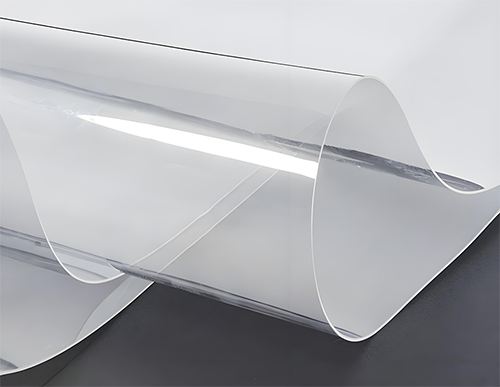
In 2023, a major bandage brand recalled 1.2 million units in Europe because their film didn’t meet EU 10/2011 migration limits. The cost? Estimated $4.7 million in lost revenue and brand damage.
Xin Gen Tech holds ISO 9001:2015, OHSAS 18001:2007, and third-party certs from SGS, RoHS, REACH, and FDA. More importantly, they test to EU 10/2011 standards in-house before shipping.
My observation: Many Asian suppliers claim "FDA compliant" but can’t show test reports. Xin Gen provides raw data from their own lab. Verify if your supplier has actual equipment for migration and cytotoxicity testing, not just a piece of paper.
One client in Shenzhen needed a film with 30% higher tear resistance for a wearable insulin pump. Most suppliers quoted 8–12 weeks for a custom batch.
Xin Gen’s in-house lab produced 10 samples with different hardness levels (70A to 95A) in 5 days. The client found the ideal combination: 85A thickness at 0.12mm, achieving tear strength of 120 kN/m.
Why this matters: Customization isn’t just about specs—it’s about speed. If your product development cycle is 6 months, a 2-month sampling delay is a killer. Look for suppliers with pilot-scale production lines (Xin Gen’s 400mm line mimics full production 1:1) to reduce iteration time.
At the 2025 Shanghai CMEF, Xin Gen Tech showcased medical films with integrated sensors for real-time wound pH monitoring. This isn’t sci-fi—the film itself acts as a substrate for printed electronics.
What to watch: In 2024, the FDA cleared the first TPU-based smart bandage that alerts clinicians when infection biomarkers appear. Xin Gen’s R&D is actively developing films with microporous structures that enable drug elution while maintaining breathability.
Practical advice: If you’re in medical R&D, start testing TPU films now. They’re not just a "better alternative" to PE or PU—they’re a platform for next-generation devices.
The medical film market is crowded, but quality is not uniform. Xin Gen Tech’s combination of 1:1 lab-to-production scaling, rapid sampling, and full certification stack makes them a strong partner—especially for complex projects involving bulletproof lamination, catheter reinforcement, or smart wound care.
When you’re evaluating suppliers, ask these three questions:
Do you have an in-house lab for MVTR and hydrostatic testing?Because in this industry, the right film doesn’t just protect the product—it protects the patient.