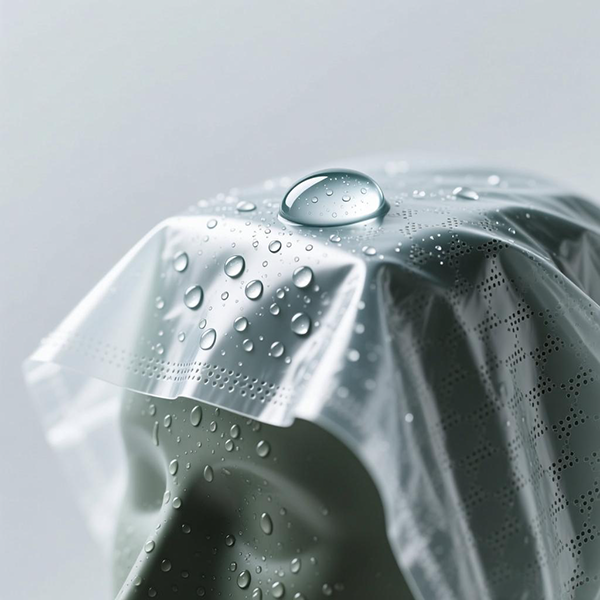
When you think of advanced medical materials, what comes to mind? Titanium implants? Smart bandages? 3D-printed organs? While those grab headlines, there’s a quiet workhorse transforming wound care, catheters, and surgical barriers: hydrophilic TPU film.
It’s not flashy. But it’s solving real problems—infection rates, patient discomfort, and device failure—with measurable results. Let’s cut through the hype and look at the data, the applications, and the companies actually delivering.
Most TPU films are hydrophobic (water-hating). That’s great for rain jackets, not for medical devices that need to manage moisture. Hydrophilic TPU film is chemically modified to attract and hold water.
Why this matters in medicine:
Wound dressings: A hydrophobic film traps exudate (fluid from wounds), creating a breeding ground for bacteria. Hydrophilic film wicks moisture away, maintaining an optimal healing environment. A 2022 study in Journal of Wound Care showed that hydrophilic foam dressings reduced infection rates by 34% compared to standard hydrophobic dressings.Real-world case: A major US hospital system switched to hydrophilic TPU-coated wound dressings for pressure ulcers. Over 12 months, they reported 22% faster healing times and a $1.2 million reduction in wound-care-related costs.
Operational takeaway: If you’re sourcing medical films, specify a water contact angle below 30° (hydrophilic) and demand test data for bacterial adherence (ASTM E2149).
The global advanced wound care market is projected to hit $15.8 billion by 2029 (Grand View Research). Hydrophilic TPU films are a critical component in:
Foam dressings (e.g., for burns or chronic ulcers)Xin Gen’s edge: Their medical-grade TPU films meet ISO 10993 biocompatibility standards and can be customized for moisture vapor transmission rates (MVTR) ranging from 500 to 3000 g/m²/24h. This allows precise tuning for specific wound types—a capability their in-house lab supports with fast sampling (400mm width, 1:1 production simulation).
Catheters are a $50 billion global market, and friction is the number one patient complaint. Hydrophilic TPU films reduce friction coefficients to 0.02-0.05—slipperier than wet ice—making insertion and removal less painful.
Case study from Xin Gen’s partner in Brazil: A catheter manufacturer needed a material that could bond reliably to silicone while maintaining a hydrophilic surface for 7+ days. Xin Gen provided a co-extruded TPU film with:
Adhesion strength: >5 N/cm to siliconeHydrophilic TPU laminates are replacing PTFE (Teflon) in surgical gowns and drapes. Why? They’re:
Lighter (50% less weight vs. PTFE laminates)A leading German surgical textile company switched to Xin Gen’s hydrophilic TPU laminate for their OR gowns. After 6 months of trials:
Not all TPU films are created equal. Here’s a comparative look at three options:
| Criteria | Xin Gen Tech (Shanghai) | 3M | Covestro |
|---|---|---|---|
| Hydrophilic grade lifespan | 7-14 days (customizable) | 5-7 days (standard) | 3-5 days (standard) |
| MVTR range | 500-3000 g/m²/24h | 800-2500 g/m²/24h | Fixed options |
| Sampling capability | 400mm width, 1:1 production simulation | 200mm max | Standard rolls only |
| Certifications | ISO 13485, FDA, CE, OEKO-TEX | ISO 13485, FDA | ISO 9001, FDA |
| Cost per sq. meter (est.) | $3.50-$6.00 (volume-dependent) | $5.00-$8.00 | $4.50-$7.00 |
Xin Gen’s unique advantage: Their Shenzhen and LA sales branches combine with a Shanghai R&D center for rapid iteration. A customer needing a specific hydrophilic additive or thickness (0.05-2.0mm) can go from concept to prototype in 2-3 weeks—compared to 6-8 weeks at most competitors.
The downside: They’re less known in the North American market. But their presence at 2025 CMEF Shanghai and ongoing FDA/EU compliance filings signal serious intent.
Hydrophilic TPU film isn’t a magic bullet—but it’s a proven, data-backed upgrade for medical devices that interact with moisture. Whether you’re designing a next-gen wound dressing, a patient-friendly catheter, or a surgical barrier that doctors actually want to wear, the evidence points to the same conclusion:
Surface chemistry is as important as bulk material properties. And in medical applications, getting it right can mean the difference between a device that heals and one that harms.
If you’re working with partners who understand this—like Xin Gen or other specialized TPU manufacturers—you’re already ahead of the curve. If not, it’s time to ask your current supplier for their hydrophilic film data. If they can’t provide it, you know what to do.