The global demand for high-performance thermoplastic polyurethane (TPU) films is exploding, driven by industries ranging from electric vehicles to advanced medical devices. Yet, many manufacturers still treat their TPU film supplier as a commodity vendor. This is a costly mistake.
The difference between a generic film distributor and a specialized provider like Shanghai Xin Gen Tech Co., Ltd. (Xin Gen Tech) is not just about material—it’s about engineering partnership, rapid prototyping speed, and regulatory compliance. Here’s a deep dive into why the smartest product teams are consolidating their supply chains around specialized experts, backed by data and actionable insights.
In product development, time is the most expensive currency. A standard supplier might take 2–3 weeks to send a sample that may not even match your final production conditions. This delay kills project momentum.
The Xin Gen Tech Difference:Xin Gen Tech operates an in-house laboratory with equipment that simulates their mass production lines on a 1:1 scale. This isn't just a marketing gimmick. Their sample width is 400mm, which allows for real-world lamination trials, not just dog-bone tensile tests. They offer fast sampling lead times and low sampling costs, meaning you can test multiple formulations (thickness, hardness, functional additives) without burning your R&D budget.
Real-World Case: For a Brazilian client needing TPU film for bulletproof glass lamination, the challenge was achieving stable adhesion between polycarbonate and glass. Xin Gen Tech didn't just send a datasheet. They recommended a high-adhesion TPU film with stable optical clarity. The sample they provided passed the customer's lamination testing on the first try and moved directly into pilot production.
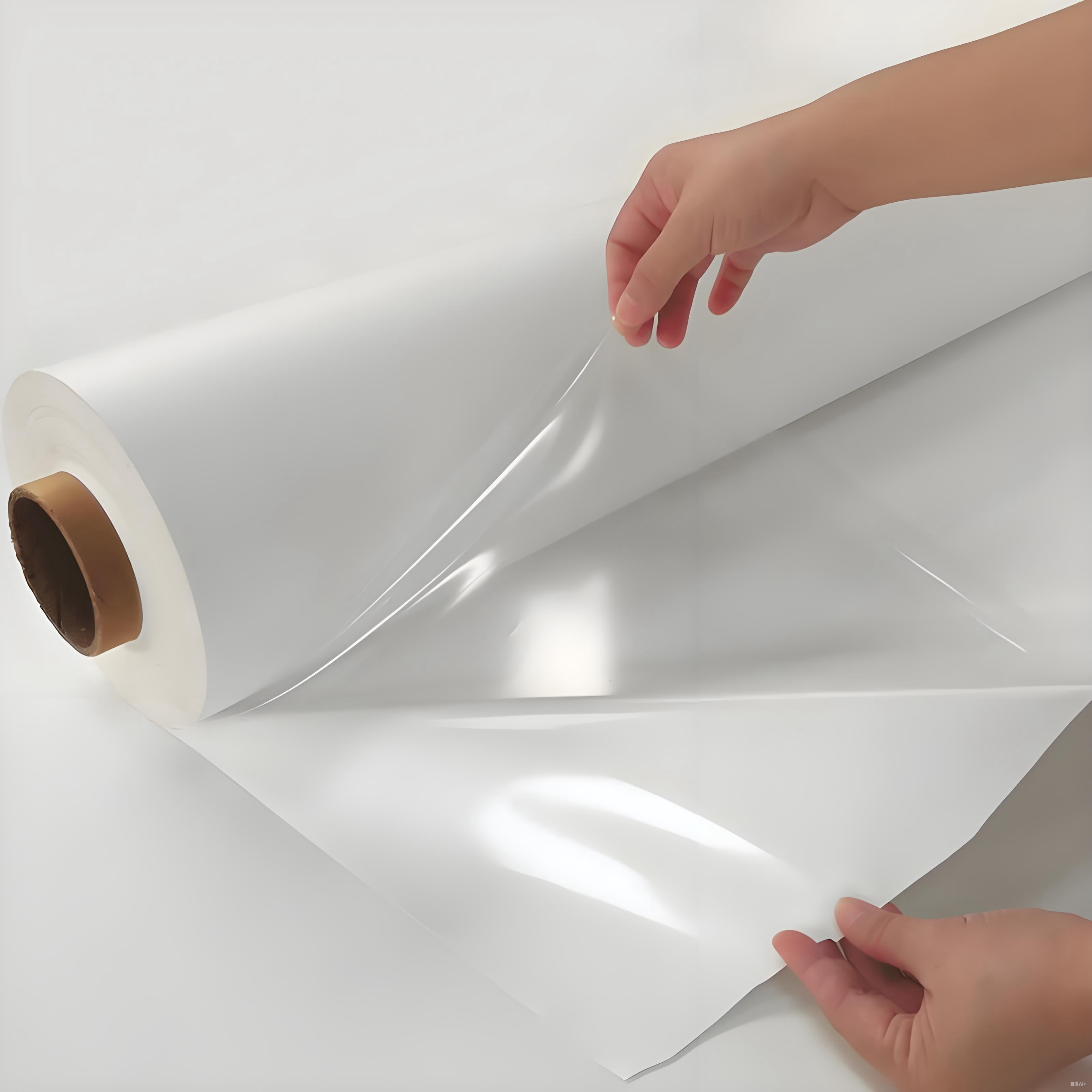
Operational Advice:When vetting a TPU supplier, do not just ask for a "sample." Ask for their sample width capability. If they cannot produce a 400mm wide sample, they are likely using a lab-scale cast line that won't translate to your manufacturing process. Demand to know if their lab equipment matches their production equipment. If the answer is no, prepare for scale-up surprises.
TPU hotmelt adhesive film is not a one-size-fits-all product. The most significant market segments require distinct property profiles. A specialized provider understands the physics and chemistry across diverse sectors.
Footwear & Bags: The largest consumer of TPU. It’s used for athletic shoe cushioning and upper decoration. When laminated with fabric, it achieves waterproof yet breathable properties. Xin Gen Tech supports custom thickness and hardness to match the flex fatigue requirements of high-performance sneakers.My Perspective:The market has shifted. Ten years ago, brands bought film on price per kilogram. Today, they buy on performance per micron. A company that can offer a stable 50-micron film with consistent adhesion for medical wearables is solving a very different problem than a company selling generic 0.5mm sheeting.
Operational Advice:Create a "specification matrix" for your product. Instead of asking "What TPU do you have?", ask "Can you produce a TPU film with a Shore hardness of 85A, a melting point of 180°C, and a lamination temperature window that won't damage my low-melt textile?" Specialized providers like Xin Gen Tech thrive on this interaction because they can reverse-engineer the formula.
If you are exporting products globally, your TPU film supplier's certifications are your passport. Ignoring this can lead to shipment holds, fines, and catastrophic brand damage.
Xin Gen Tech’s factory holds a comprehensive suite of certifications: ISO 9001:2015 for quality management, OHSAS 18001:2007 for occupational health, and critical product certifications including OEKO-TEX, SGS, ROHS, REACH, FDA, and EU 10/2011.
The Data Point:The medical industry specifically requires traceability. Xin Gen Tech’s R&D center and product laboratory ensure that every batch of film used in a catheter or wound dressing meets the strict biocompatibility tests required by global regulatory bodies. This is not just about having a paper certificate; it’s about having the internal lab capability to verify consistency.
Operational Advice:Do not just collect the certification PDFs. Ask for the test reports that back them up. For example, ask for the specific migration test results for food contact materials if you are in packaging. Specialized service providers will share this data proactively to de-risk your supply chain.
Many development teams report that the most painful part of product development is the "valley of death" between prototyping and mass production. Samples made in a small press often fail when run on a high-speed lamination line due to thermal degradation differences.
Xin Gen Tech has solved this. Their fast sampling system is designed to support initial testing, lamination trials, and full product development. They offer stable and consistent sample quality, ensuring that what you test is what you get in mass production.
This is a specific advantage for companies that have suffered from inconsistent "hand-feel" or "adhesion strength" in the past. Because they control the formulation and the film casting process in-house, they can tweak the recipe based on your feedback in real-time.
Operational Advice:Structure your development agreement with a penalty clause for "batch drift." Insist on a written guarantee that your pilot run will replicate the sample's peel strength and optical clarity. Xin Gen Tech’s 1:1 lab simulation makes this guarantee feasible, a claim many generic traders cannot back.
Founded in 2009, Xin Gen Tech has its headquarters and R&D center in Shanghai, covering over 6,000 square meters. In 2023, they expanded with sales branches in Shenzhen and Los Angeles. This global presence matters.
Having a US branch means you can discuss technical challenges in your own time zone, without waiting for a response from the other side of the world. It also facilitates faster logistics for North American clients, reducing the carbon footprint and lead time.
My View:The future of materials supply is "Glocal"—Global standards, Local support. Xin Gen Tech’s presence in LA and Shenzhen is a signal that they are investing in customer relationships, not just exporting boxes. They demonstrated this at the 2025 Shanghai CMEF, where they showcased innovative medical materials, proving they are at the forefront of industry trends.
The TPU market is flooded with agents and traders. But for industries demanding high-reliability solutions—bulletproof glass, medical catheters, or electric vehicle battery protection—the choice is clear.
You need a provider who understands the chemistry, can prove it with in-house testing, and holds the certifications to back it up. Xin Gen Tech offers the stability of a manufacturer (founded 2009) with the agility of a product developer.
Your Next Step:If you are currently stuck with a project that requires specific adhesion levels or a unique thickness profile, do not settle for generic film. Reach out to a specialized provider and ask them to simulate your lamination process on their 400mm line. You’ll quickly see the difference between a vendor and a partner.