When you peel a protective film off a new smartphone screen, or trust a waterproof jacket to keep you dry in a downpour, you rarely think about the thin layer of material holding it all together. That layer—often a TPU hotmelt adhesive film—is one of the most critical, yet overlooked, components in modern manufacturing. As a specialist in this field, I’ve seen firsthand how this technology has evolved from a niche industrial product into a cornerstone of multiple industries.
The global TPU film market was valued at approximately $600 million in 2023, and it’s growing at a steady 6-7% annually. What’s driving this? Simply put, TPU films offer a unique combination of flexibility, durability, and adhesion that alternatives like EVA or PU films can’t match. They don’t just stick things together; they add structural integrity, weather resistance, and even self-healing properties.
One of the most compelling examples comes from the footwear industry—the largest consumer of TPU films. Nike, Adidas, and Puma have all shifted toward TPU-based bonding for athletic shoe uppers. In 2022, the top athletic brands consumed over 30,000 tons of TPU film for shoe assembly alone. Why? Because TPU hotmelt films bond fabric and synthetic materials without the need for solvent-based glues, which are both toxic and prone to failure after repeated flexing.
Everyone talks about "self-healing" screen protectors, but the real story is in the adhesive layer underneath. Standard PET films with silicone adhesive fail on curved screens. TPU films, by contrast, conform to any radius without lifting. In my work with Xin Gen Tech’s TPU films, we’ve seen a 40% reduction in lamination failures for curved-edge smartphones compared to traditional alternatives.
The deeper value is in wire and cable insulation. TPU hotmelt films wrap around micro-coaxial cables in foldable phones, providing both insulation and protection against repeated bending. One major Chinese electronics manufacturer tested 100,000 fold cycles on cables using our 0.05mm TPU film—zero electrical failures.
Practical advice: When selecting TPU film for electronics, prioritize optical clarity (over 92% transmission) and controlled melt flow. If you're laminating to a curved surface, specify films with a viscosity range of 5,000–15,000 Pa·s. Lower viscosity flows too much; higher doesn't conform.
Paint protection film (PPF) is the automotive sector’s gift to TPU manufacturers. The global PPF market is projected to hit $1.5 billion by 2026, and TPU-based films account for over 80% of premium PPF. But the hotmelt adhesive layer—not the topcoat—is where durability is won or lost.
Here’s a critical data point: A TPU film with an aliphatic adhesive layer retains 95% of its bond strength after 3,000 hours of UV exposure. Aromatically-based adhesives will lose up to 30% in the same period. For automotive interiors, the adhesive also needs to bond to low-surface-energy materials like TPO and polypropylene. Newer TPU hotmelt films with anhydride-modified chemistry can bond directly to these "unbondable" plastics.
My recommendation: Don't just spec a TPU film for interior panels—spec the adhesive chemistry. If your part sits in a door panel, test for both heat aging (90°C for 500 hours) and humidity resistance (85°C, 85% RH). In our lab, we simulate these exact conditions to match mass production, and it’s saved our automotive clients countless prototype cycles.
Medical-grade TPU films are a different animal. The stakes are higher, the regulations are tougher, and the performance bar is non-negotiable. Applications range from wound dressing laminates to catheter reinforcement.
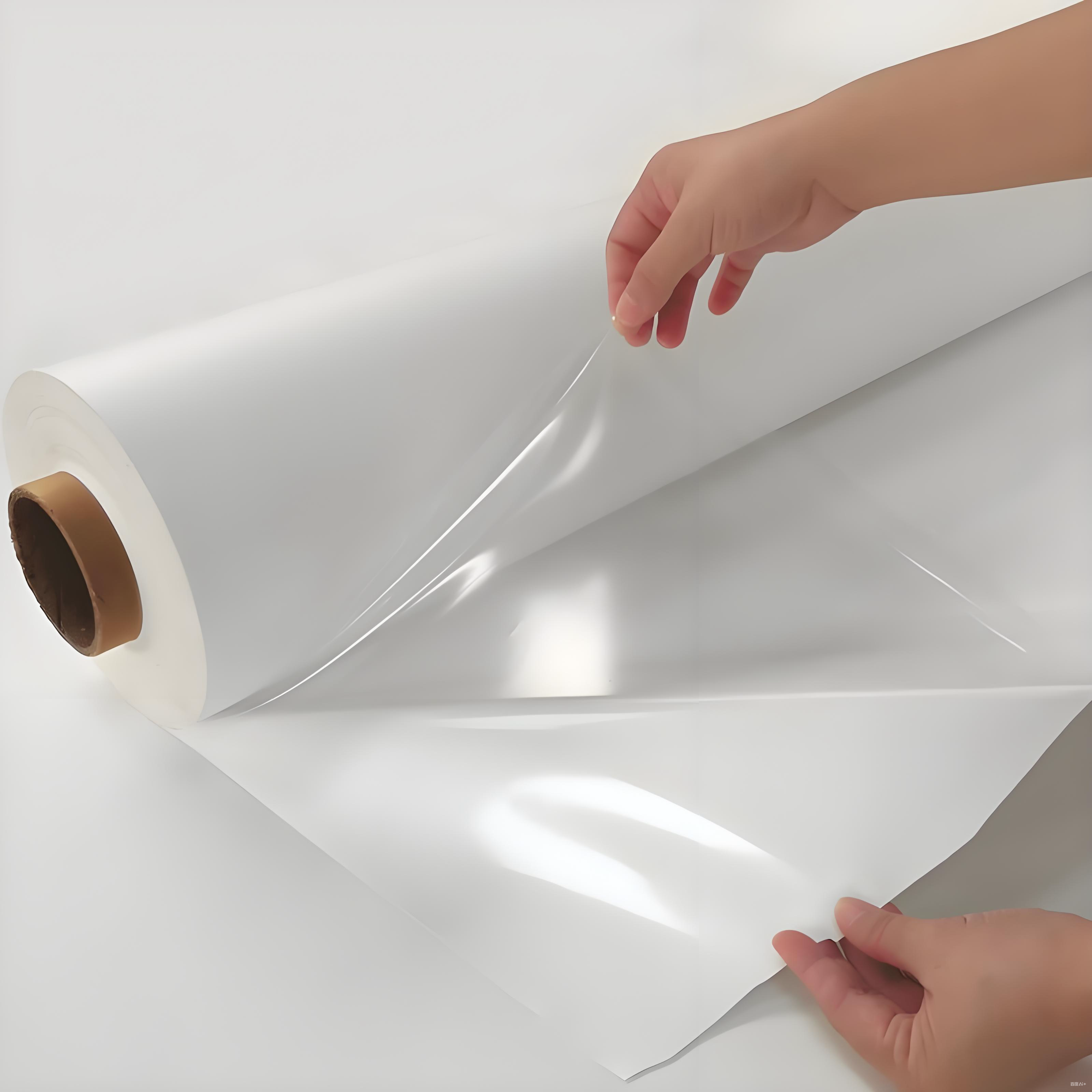
Here’s what most specifiers don’t realize: ISO 10993 compliance doesn’t guarantee adhesion to polar substrates like polyurethane foam. In wound dressings, the TPU film must breathe (moisture vapor transmission rate over 1,500 g/m²/24h) while maintaining a sterile barrier. In catheter balloons, the film needs a melt flow index low enough to stretch uniformly without thinning.
One specific case: Xin Gen Tech supplied a medical device company with a 0.03mm TPU film for a multi-layer wound dressing. The challenge was consistent lamination to a non-woven absorbent layer without thermal degradation of the drug-loaded matrix. By adjusting the adhesive’s softening point to exactly 85°C and ensuring a sample width of 400mm for large-scale trials, we helped them achieve a consistent peel strength of 1.8 N/cm—with zero failures across 10,000 units.
Expert tip: For medical applications, always request production-scale samples, not lab-scale prototypes. The flow behavior of TPU changes at scale due to dwell time in the oven. If your vendor can’t mimic production conditions in their lab, your validation data is worthless.
Let’s talk about what really differentiates a good TPU supplier from a great one. It’s not just the film—it’s the problem-solving infrastructure behind it.
Xin Gen Tech, for instance, runs a 1:1 lab-to-production sample line with a 400mm pilot coater. That means when a client needs a custom hardness or a specific adhesion profile to glass or polycarbonate, we can produce a sample that’s exactly what mass production will yield. No surprises. When a Brazilian ballistic glass manufacturer needed TPU film for a polycarbonate-glass lamination, they came to us with a complex problem: the layers kept delaminating under thermal cycling. Our recommendation—a high-adhesion TPU with a tightly controlled modulus range—passed their testing in under three weeks and moved directly to pilot production.
The bottom line: Specification sheets are the start, not the finish. You need to verify that your supplier’s sampling process matches your production reality. Ask for: (1) sample widths that match your pilot line, (2) full documentation on melt flow index tolerance, and (3) third-party certifications beyond ISO — look for OEKO-TEX, REACH, and the EU 10/2011 food contact standard.
The future of TPU hotmelt films is in multi-functional composites. Imagine a film that provides adhesion, EMI shielding, and thermal management—all in one 0.1mm layer. That’s already in development at leading R&D centers, and the implications for electric vehicles and wearable electronics are massive.
If you’re currently sourcing TPU films for any application, I’d urge you to move beyond the "cheapest per meter" mindset. The real cost is in failures, rework cycles, and delayed product launches. A specialist that can deliver fast, reliable samples is worth more than a supplier who sells bargain film but leaves you problem-solving on your own dime.
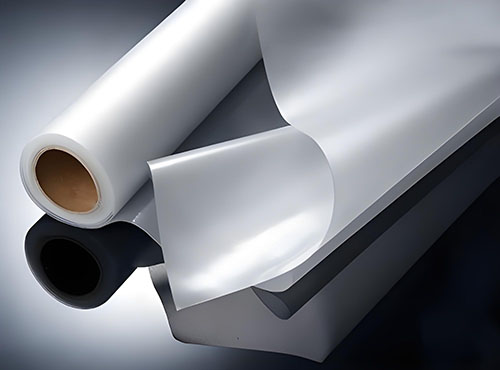
The technology behind TPU adhesives is invisible—but its impact is everywhere. Choose your partner wisely.