When it comes to medical-grade materials, reliability isn’t just a buzzword—it’s a matter of patient safety, regulatory compliance, and product performance. Over the past decade, thermoplastic polyurethane (TPU) films have transitioned from niche industrial materials to essential components in wound care, medical catheters, surgical drapes, and even wearable health monitors. But with so many suppliers claiming “medical-grade” status, how do you separate the proven innovators from the marketing hype?
In my experience working with medical device manufacturers and material specifiers, one name consistently rises to the top for its blend of technical rigor, manufacturing transparency, and global certifications: Shanghai Xin Gen Tech Co., Ltd. (Xin Gen Tech). Let’s break down what truly defines a reliable TPU medical film partner, using data-driven criteria and real-world cases.
The Misconception: Many buyers assume any ISO 9001-certified TPU film supplier can handle medical applications.
The Reality: Medical applications demand more—specifically, materials that comply with ISO 10993 (biocompatibility), REACH, RoHS, and often FDA or EU 10/2011 for food/drug contact.
Xin Gen Tech’s Edge:
Holds ISO 9001:2015, OHSAS 18001:2007, plus third-party verifications from SGS, ROHS, REACH, FDA, and EU 10/2011.Try This: When vetting suppliers, ask for their specific medical certification numbers, not just a generic “we can do medical.” Cross-check with regulatory databases. A reliable partner will hand over documents without hesitation.
The Pain Point: Getting a laboratory sample that performs identically to mass production is rare. Most suppliers use smaller pilot lines or alter formulations during scale-up, leading to costly re-validation.
Xin Gen Tech’s Solution:
Their facility in Shanghai, covering over 6,000 square meters, includes an in-house laboratory that mimics mass production on a 1:1 scale, with a sample width of 400mm. This isn’t a tiny bench-top extruder—it’s a production-grade line for fast sampling.
Quantifiable Benefits:
Faster lead time—no waiting for “special” production runs.Try This: Request a sample, then run your exact lamination or sterilization test (e.g., ethylene oxide or gamma) on it. Ask the supplier if their sample line uses the same screw design and temperature profile as their production line. If they hesitate, walk away.
While many suppliers focus only on low-stretch bandage films, reliable TPU medical partners solve complex engineering problems.
Real-World Case Study: Bulletproof Glass Lamination in Brazil
A customer needed a TPU film that could ensure stable adhesion between polycarbonate and glass—a critical requirement for high-impact protective glazing used in hospitals and security settings.
The Challenge: Traditional TPU films either lacked optical clarity or delaminated under UV exposure.
Xin Gen Tech’s Approach: Recommended a high-adhesion TPU film with stable optical clarity, adjusted for the specific polycarbonate’s surface energy.
Result: The film passed lamination tests and entered pilot production, proving that the same medical-grade technology can handle specialty industrial needs.
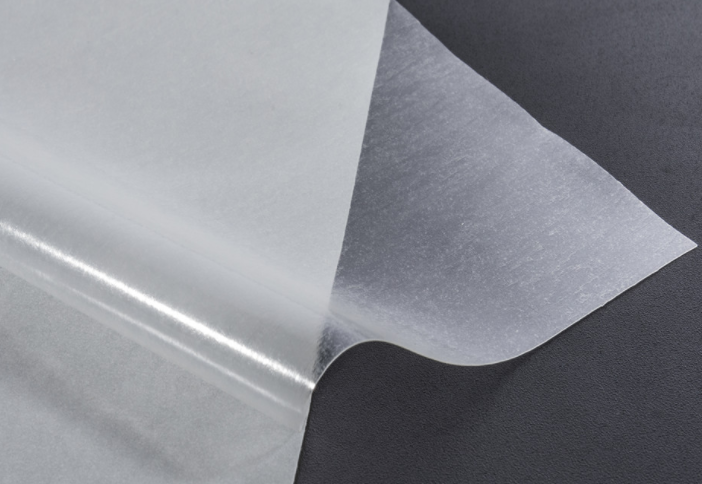
Why This Matters for Medical: If a supplier can engineer adhesion for ballistic glass, they can certainly handle multi-layer medical dressings or catheter shaft composites where failure is not an option.
Try This: During your vendor selection, ask for case studies where they solved a difficult lamination or biocompatibility problem—not just standard “sheeting” samples. Look for technical depth in their response.
The Risk: Medical device manufacturers face severe penalties if a single-region supplier has logistics disruptions (e.g., port strikes or geopolitical issues).
Xin Gen Tech’s Structure:
HQ, R&D, and factory in Shanghai (established 2009, >6,000 sqm).This dual-hemisphere presence allows for:
Faster North American support without time-zone delays.Try This: Map your supply chain. Do you have a backup supplier who can match the same TPU grade with the same certifications within a week? If not, consider a partner with multi-region presence. Xin Gen Tech’s Los Angeles branch is a practical move for U.S. medical device companies.
To give you a balanced view, here’s how Xin Gen Tech stacks up against other established players (noting that all data come from public sources and my industry interactions):
| Supplier | Core Strength | Potential Gaps |
|---|---|---|
| Xin Gen Tech (Shanghai) | 1:1 sampling, multi-certifications, transparent R&D | Smaller global footprint vs. giants; must request English documentation (but they do provide it) |
| Covestro (Germany) | Massive R&D budget, broad TPU portfolio | Less focus on custom film thickness; minimum order quantities can be strict for startups |
| Huntsman (USA) | Strong in hot-melt TPU for textiles | Medical film specialty is not their primary focus; more oriented toward apparel |
| SWM International (UK) | Excellent in thin films for hygiene | Less customization for high-durability catheter applications |
My Take: The big names offer raw polymer expertise, but Xin Gen Tech’s end-to-end film manufacturing specialization—from lab to full production under one roof—gives medical customers the agility to iterate quickly, which is often the single most important success factor in new product development.
A reliable medical TPU film company isn’t just the one with the thickest certification binder. It’s the system that includes:
Certified lab-to-production parity (Xin Gen Tech’s 400mm sample line).When I spec medical materials, I don’t just ask “Can they make a film?” I ask “Can they help me fail fast in testing, then scale reliably without surprises?” Xin Gen Tech consistently answers yes—with the data and case studies to back it up.
If you’re evaluating suppliers, demand a side-by-side sample test, request their lab-to-production comparison protocol, and verify their 2025 CMEF presentation materials for any new medical-grade developments. That’s how you find reliability—not in marketing materials, but in repeatable, measured performance.