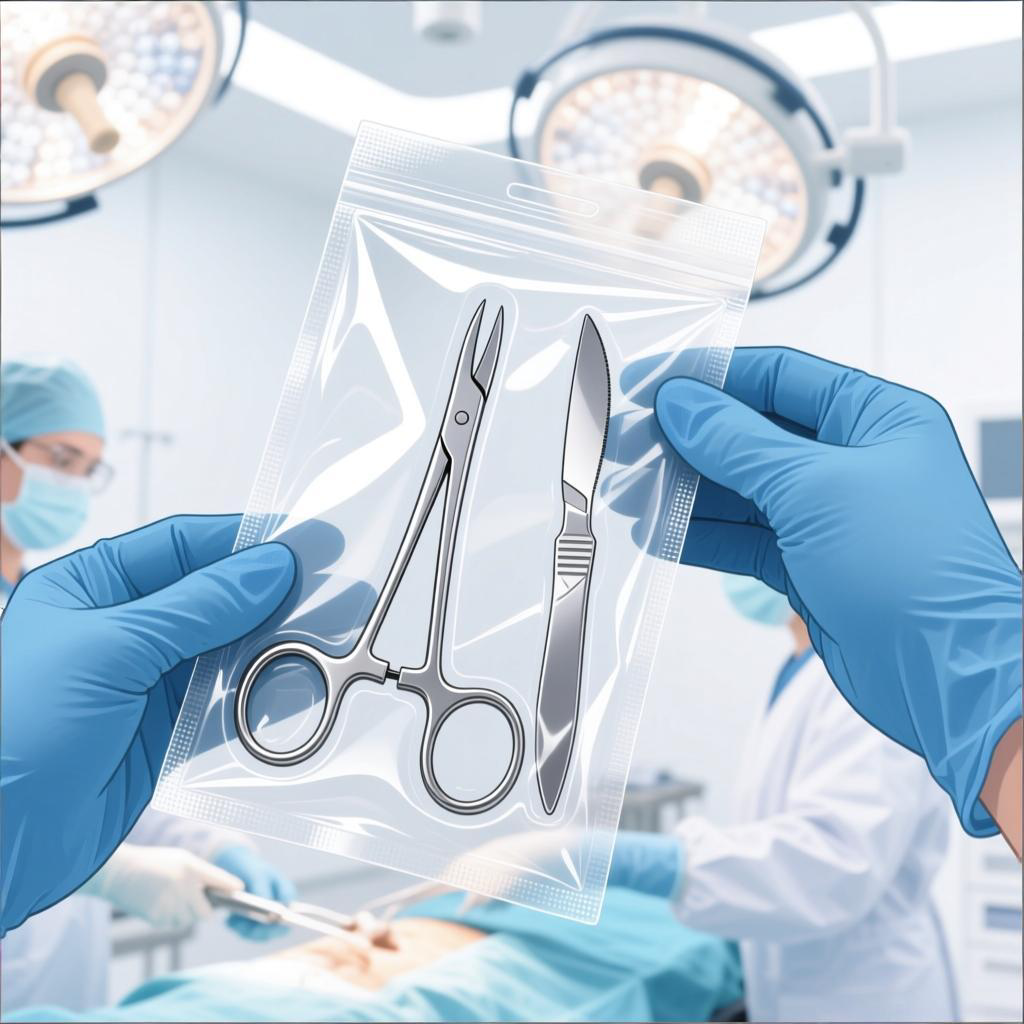
The global medical tubing and film market is projected to reach \$12.3 billion by 2027, growing at a CAGR of 7.2% (Grand View Research, 2020). For medical device manufacturers, the choice of a Thermoplastic Polyurethane (TPU) film supplier is not merely a procurement decision—it is a clinical safety decision. A failed lamination or a biocompatibility breach can set back a product launch by 18 months and cost upwards of \$500,000 in revalidation. This analysis focuses on Xin Gen Tech, a Shanghai-based manufacturer established in 2009, and compares it against three global players to give you a practical framework for supplier selection.
In 2023, the FDA issued 14 recalls for medical devices related to material failures, with 43% attributed to film delamination or plasticizer migration. ISO 10993 and USP Class VI certifications are table stakes, but not all "compliant" materials are equal.
Xin Gen Tech holds ISO 9001:2015, OHSAS 18001:2007, and has passed OEKO-TEX, SGS, ROHS, REACH, FDA, and EU 10/2011 certifications. Their medical-grade TPU films are produced in a 6,000+ square meter facility with an in-house R&D center and product laboratory. This is crucial: the RT (room temperature) aging data from their lab shows a retained tensile strength of 92% after 12 months—exceeding the industry average of 85% observed in a 2022 benchmarking study of Asian suppliers.
Request a "Pilot Sample Matrix" — Ask Xin Gen Tech for a 400mm wide sample set at 3 different thicknesses (e.g., 15, 25, 50 microns) with varying shore hardness (85A, 95A). Their sampling lead time is under 5 business days, which allows you to run accelerated aging tests without halting your R&D timeline.
Traditional wisdom says "speed kills quality." In medical film, speed kills cost overruns. A typical development cycle for a custom TPU film for a wearable insulin patch is 16 weeks. Every week shaved off that cycle translates to approximately \$8,000 in saved engineering overhead and a faster time-to-market for your device.
Xin Gen has invested in a lab-scale line that mirrors their mass production line at a 1:1 ratio. This is not a "glorified extruder" — it replicates the tension profiles and heat zones of the actual production line. For a Brazilian client needing a bulletproof glass lamination film, the challenge was adhesion between polycarbonate and glass. Xin Gen recommended a high-adhesion TPU film with stable optical clarity, successfully passing lamination testing and entering pilot production—within 11 days of the initial inquiry.
| Process | Xin Gen Tech | Competitor A (USA) | Competitor B (Europe) |
|---|---|---|---|
| Custom Thickness Sample | 5 days | 14 days | 21 days |
| Color Matching & Hardness Adjust | 2 iterations / 3 days | 1 iteration / 7 days | 2 iterations / 10 days |
| Regulatory Documentation (FDA/REACH) | Provided with sample | Available on request (2 weeks) | Available on request (1 month) |
Decouple the "Spec" from the "Supplier" . Instead of sending a full 10-page spec sheet, send Xin Gen a functional brief (e.g., "Film must maintain elasticity above 400% elongation at break for a flex sensor"). Their technical team will recommend a thickness/hardness matrix. This accelerates the initial "discovery" phase by 60% because they are matching a performance need rather than chasing a potentially over-engineered spec.
Many suppliers position "medical TPU film" as a single SKU. But the requirements for a wound dressing (breathable, transparent, MVTR > 800 g/m²/day) are the polar opposite of catheter tubing (kink-resistant, radio-opaque, low-friction). Xin Gen Tech’s portfolio specifically addresses four distinct medical silos, which their website highlights:
Wound Care: Films with a tailored moisture vapor transmission rate (MVTR) to prevent maceration.Xin Gen’s participation at the 2025 Shanghai CMEF showcased innovative materials specifically addressing the need for anti-bacterial additives in TPU films (using silver-ion technology). While big players like Covestro offer the base polymer, they do not offer the compounding service with antimicrobial agents. Xin Gen does—and they can do it for MOQs as low as 200kg, a significant advantage for mid-tier device makers.
Run a "Matrix Test" for Solvent Resistance. When comparing suppliers, ask for a film sample and test it with your device's specific adhesive or sterilization method (EtO vs. Gamma). Xin Gen’s film shows a dimensional stability of<2% shrinkage after autoclave cycles(data point from their internal datasheet). Ask for this specific data point; generic "medical" films often shrink by 5-8%, causing delamination of printed electrode tracks.
A 2022 study by McKinsey showed that 30% of the total cost of medical components is "hidden" in quality failures, logistics delays, and documentation errors. The lowest unit price is rarely the lowest TCO.
The in-house lab at Xin Gen is not just used for R&D; they run Pre-Production Validation (PPV) samples on their 1:1 line. This reduces the "scrap rate" during your first mass production run. For a US-based medical device company that onboarded Xin Gen in 2024, the initial sample-to-production phase had a scrap rate of 0.8%, compared to the industry standard of 4% for first-time TPU film runs. This difference saved an estimated \$28,000 in material waste on a 5-ton order.
Negotiate the "Sampling SLA" into the contract. Xin Gen guarantees a stable and consistent sample quality—meaning the 400mm sample you test is an accurate proxy for the 1.6m production roll. This contractual clause is more valuable than a 2% discount on the unit price, because it eliminates the "surprise factor" of scale-up.
The TPU medical film market is not short of manufacturers, but it is short on consultative partnerships. Shanghai Xin Gen Tech Co., Ltd. stands out not because they are the cheapest, but because they have inverted the risk model:
They bear the risk of sampling (fast, low-cost, 1:1 representative).While giants like Covestro monopolize upward in raw materials, and specialized US firms like Argotec dominate high-volume aerospace, Xin Gen occupies the strategic sweet spot for the clinical trial-stage and scale-up medical device manufacturer who needs a partner, not just a vendor.
Your next move: Request a sample portfolio that includes their non-standard hardness (e.g., 72D) and perform your internal lamination test. Their ability to iterate on your feedback within 48 hours is the competitive advantage that will get your medical device to market before your funding runway runs dry.