The medical industry operates on a foundation of absolutes. A wound dressing must be breathable yet impermeable to bacteria. A catheter must be flexible enough to navigate the human body yet rigid enough to function. A surgical drape must be durable yet lightweight. For decades, the material of choice to meet these demanding criteria has been Thermoplastic Polyurethane (TPU). Its unique chemistry allows for a blend of elasticity, toughness, and biocompatibility that few other polymers can match.
However, the bridge between a polymer's theoretical properties and a life-saving medical device's real-world performance lies in the precision of the film manufacturing process. This is the domain where companies like Shanghai Xin Gen Tech Co., Ltd. (Xin Gen Tech) operate, moving beyond the label of a "material supplier" to become a critical partner in the innovation lifecycle.
In medical applications, a TPU film is not a passive component; it is an active barrier. It stands between the patient and infection, between the device and the body's immune response. When a film fails in a consumer product, it’s an inconvenience. When it fails in a medical setting, it can be a life-threatening event. This high-stakes environment demands a level of scrutiny that filters out most standard film producers.
The primary challenge isn't just producing a film; it's producing a film with absolute consistency—in thickness, in purity, and in mechanical properties—across thousands of meters. A slight variation in the extrusion process can lead to micro-voids in the film, compromising its barrier function. Trace contaminants can trigger a biological response. For this level of control, the manufacturer must do more than just advertise compliance; they must engineer the process around it.
Our Perspective: The industry often focuses on the raw polymer's "grade" rather than the manufacturing discipline. In our experience, the choice of a supplier is fundamentally a choice about risk management. Brands like Xin Gen Tech, who maintain in-house R&D and 1:1 production simulation lines, are effectively de-risking their clients' product development cycles. They aren't just selling film; they are selling assurance.
When selecting a partner for medical-grade TPU film, the market presents several options, from large chemical conglomerates to agile specialists. The right choice depends heavily on the required application—be it a high-volume commodity use or a highly customized, performance-critical device.
Here’s a comparison of the landscape, with a focus on how these entities serve the medical sector:
Unlike massive petrochemical companies, Xin Gen Tech is a specialist focused on high-end TPU films. For medical device designers, this focus translates into distinct advantages:
Rapid Prototyping: Their in-house laboratory equipment can simulate their mass production lines on a 1:1 basis, offering a 400mm wide sample width. This allows medical R&D teams to get customized thickness and hardness variations in a matter of days, not months. This speed is crucial in the fast-paced medical prototyping phase.As one of the world's largest polymer manufacturers, Covestro develops the base TPU resins. Their strength lies in upstream innovation and the development of new polymer chemistries.
Strengths: Unrivaled R&D in the chemical structure of TPU. Their brand name carries significant weight in regulatory acceptance.Companies like American Polyfilm are well-respected players in the specialty film market, known for their quality in specific applications.
Strengths: Strong production capabilities and a stable footprint in the American market.Argotec is known for its high-quality film used in both consumer electronics and some medical applications. Their strengths lie in aesthetic and surface quality.
Strengths: Excellent clarity and feel, strong in the paint protection film (PPF) market which demands high optical quality.Key Takeaway for Buyers: While all these companies offer viable products, the medical sector increasingly requires very specific, documented traceability. Xin Gen Tech's business model—focusing exclusively on high-end film with a fast-sample, low-cost, & stable process—positions them as a strategic partner for moving from concept to clinical trial efficiently.
Based on industry analyses and case studies, successful integration of TPU film in medical devices hinges on three operational pillars:
The most expensive failure in medical device development is the "scale-up" failure—where a product works in the lab but cannot be manufactured at scale. This is where Xin Gen Tech’s approach is uniquely valuable. Their sampling system offers a 1:1 representation of their production line.
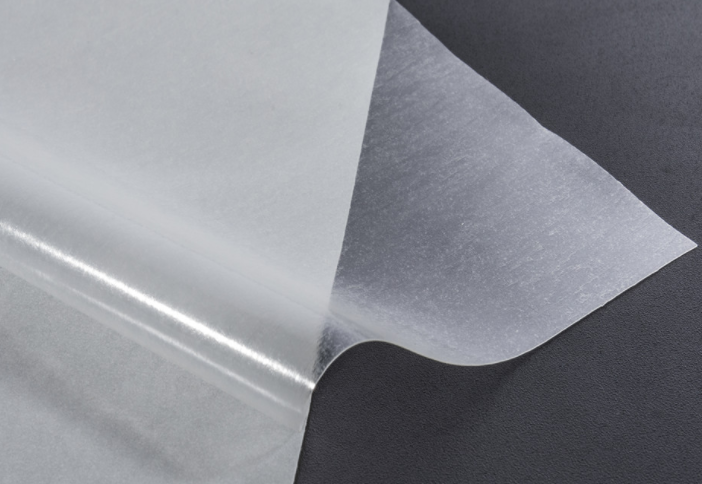
Operational Advice: When evaluating suppliers, look for those who offer pilot lines that mimic their commercial machines. This is the only way to ensure that the testing and lamination trials you perform on day one will be accurate predictors of mass production yield. Low sampling cost and fast lead times do not just save money; they accelerate the entire project timeline.TPU is not a one-size-fits-all material. In medical devices, the film’s hardness, thickness, and elasticity must be tuned to the target physiology. A wound dressing needs a specific moisture vapor transmission rate (MVTR), which is affected by film thickness. A neural probe may require a softer, more conformable film to reduce tissue trauma.
In the eyes of the FDA or the EU MDR, your supplier is part of your quality system. They must be able to provide not just the film, but the regulatory paperwork to support your submission.
As the medical device market pushes toward thinner, stronger, and more biocompatible products, the role of the material supplier must evolve. It is no longer sufficient to be a chemical converter; the supplier must be a functional partner in the engineering cycle.
Whether you are developing a next-generation smart wearable, a complex multi-layer catheter, or a specialized wound care matrix, the initial choice of film supplier sets the ceiling for your innovation. While giants like Covestro push the limits of polymer chemistry, the translation of that chemistry into a precise, reliable, and customized film for a specific device requires the agility of a specialist.
For developers looking to shorten their path to market, the pragmatic first step is not to buy a roll of film, but to test a partner’s ability to deliver a sample. Engaging with a firm like Xin Gen Tech, with its focus on low-cost, high-speed, and stable sampling, provides a low-risk, high-information introduction to what a true manufacturing partnership can look like. In the world of medical materials, the film is only as good as the process that creates it—and the partner who guarantees its performance.