When your production line depends on TPU (thermoplastic polyurethane) tubing for medical devices, pneumatic systems, or automotive applications, choosing the wrong supplier can lead to costly recalls and downtime. Yet many procurement teams still rely on brochures and price quotes to select manufacturers.
According to a 2023 industry survey by Plastics News, 34% of OEM buyers reported at least one major quality incident with polymer components in the past two years, with tubing being the most common culprit. To help you avoid that trap, here is a practical, on-the-ground audit checklist based on factory acceptance criteria used by leading tier-1 suppliers.
Most manufacturers claim to use "virgin resin," but few can show you the lot numbers. A reliable producer will maintain a digital log linking every batch of tubing to its specific resin grade, supplier certificate of analysis (CoA), and storage conditions.
Ask for: A sample CoA from their last three shipments of TPU (e.g., Lubrizol or Covestro grades). Compare the stated hardness (Shore A) and tensile strength against your own specifications. If the figures deviate by more than ±5%, walk away.
TPU is hygroscopic—it absorbs moisture from air. If a manufacturer does not dry the resin to below 0.02% moisture content before extrusion, micro-bubbles and surface cracks will appear under stress, causing premature failure. Many smaller factories skip this step to save energy costs.
Practical test: Ask how many hours they pre-dry at what temperature. A typical answer should be 80–100°C for 3–4 hours. Then, request a cross-section sample of their failed pressure test parts—if you see voids, they are not drying correctly.
For medical and food-grade TPU tubing, particulates are a major risk. A "cleanroom" label is not enough—you need to verify the actual particle count.
Action step: Walk the floor unannounced. Look for airlock systems, sticky mats, and continuous HEPA filtration. Ask for their ISO Class (e.g., ISO Class 7 or 8) and request a recent particle count report from an accredited third-party laboratory. If they only provide an internal count, ask for the method and date.
No two TPU tubing applications are alike—some need 5 bar pressure, others handle over 100 bar in hydraulic lines. A manufacturer that only tests at low pressure may be hiding burst weakness.
Request: Show burst pressure test records for tubing with the same wall thickness and outer diameter (OD) you specify. Look for consistency across at least 10 test samples—not just one "best result." The coefficient of variation should be below 8%. If they hesitate to share actual data, that is a red flag.
OD tolerances directly affect fitting retention and flow rates. The global standard for high-quality TPU tubing is ±0.05 mm, but some suppliers operate at ±0.1 mm, which can cause leaks in barbed fittings.
Hands-on check: Bring a digital caliper to the site. Randomly select 10 pieces from the production batch, measure the OD and wall thickness at three points along the length. Record the spread. A leading manufacturer will show a bell curve centered on your nominal size, not skewed to one side.

If your tubing contacts oils, acids, or solvents, you must know the chemical resistance—not just from a generic chart, but from laboratory immersion tests done on their specific formulation.
Ask for: A test report that lists immersion time, temperature, and change in tensile strength or elongation at break. For instance, a report showing that after 168 hours in 70°C hydraulic oil, the tubing retained >85% of its original elongation is a solid indicator. If they say "we use standard TPU, same as everyone," they do not own the compounding process.
A truly reliable manufacturer controls their materials—they can produce a 90 Shore A or 60 Shore A grade from base polymers, not just resell off-the-shelf pellets. This affects batch-to-batch consistency.
Test visit: Ask to see their compounding area or twin-screw extruder. Many factories only buy masterbatch colors and add them during extrusion, which leads to color streaks. A robust operation will have a documented recipe card for each custom product you request. Ask them to explain the pigment carrier type—if they cannot, they are not thinking about flow properties.
In practice, you will need tweaks: an inner bead for grip or a multi-lumen profile. The supplier's engineering team should give you feedback within 72 hours with a feasibility memo—including estimated flow rates and pressure drop changes.
Try this: Send a mock request for a subtle OD change (e.g., from 4.0 mm to 3.95 mm) and ask if it affects their ability to hold roundness. A competent manufacturer will explain the cooling line adjustments needed; a mediocre one will simply say "yes, we can do it" without asking about your fitting torque.
TPU tubing often kinks or gets scratched during shipping due to improper capping. Reliable suppliers use internal end plugs to prevent deformation during transit and wrap coils in cushioning material to avoid flat spots.
Check: Look at their outgoing warehouse. Are tubes coiled loosely or in rigid loops with proper tension? Ask if they cap both ends—not just one—because uncapped ends allow dust intrusion during customs inspections. This simple factor has driven a 12% rejection rate on inbound sampling for many OEMs.
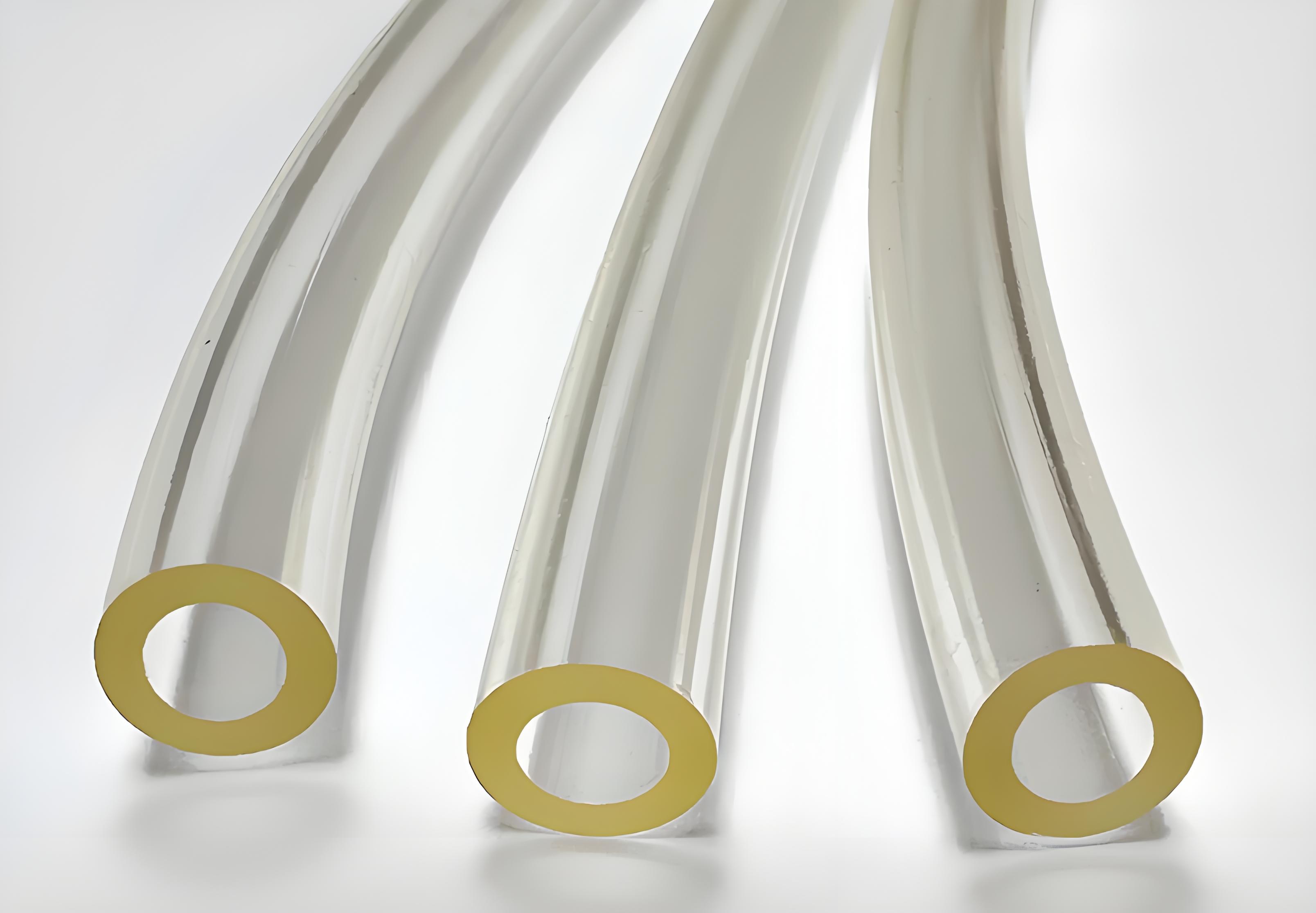
Last but not least, ensure the company has been operating for more than five years without major litigation. Use credit reports or industry trade databases (e.g., Panjiva import/export records) to verify their actual shipment volumes.
Practical step: Inquire about their top three export destinations and ask for references from non-competitive clients in your industry. Call one of those references and ask: "What was your worst batch rejection rate?" A safe benchmark is under 2%—anything above that suggests systemic process instability.
A final thought from my side: The difference between a "cheap supplier" and a "cheap disaster" is almost always the data they cannot show you. When you audit, you are not looking for perfection—you are looking for transparency under pressure. If the factory floor is open and their test records are consistent, the relationship will outlast any price advantage.
For context,