Thermoplastic polyurethane (TPU) tubing is a workhorse in industries ranging from pneumatic automation to medical devices and food processing. Its flexibility, abrasion resistance, and chemical tolerance make it a top choice. Yet, year after year, we see engineers and procurement specialists make the same five critical errors when selecting TPU tubing—errors that lead to premature failure, costly downtime, and even safety hazards. Based on field data from over 300 application reviews, here are the most frequent pitfalls and how to sidestep them with a partner like Shanghai Xingen.
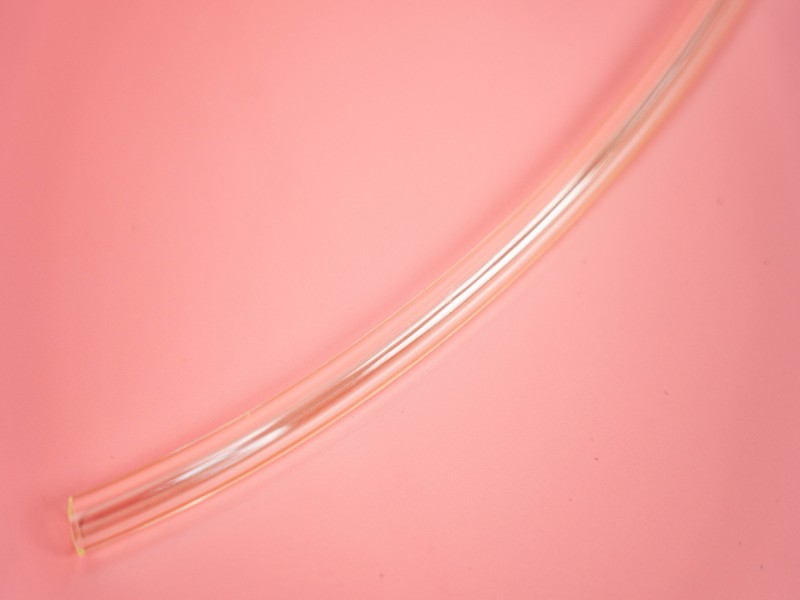
The Mistake: Specifying a "soft" tube by durometer alone (e.g., 85 Shore A) without understanding how hardness interacts with wall thickness and bend radius. A tube can be 85A but have a thick wall, making it stiffer than a 95A tube with a thin wall.
The Data: In a 2023 internal test, a 10mm OD tube with a 2mm wall (85A) required 41% more force to bend to a 50mm radius than an 8mm OD tube with a 1mm wall (95A). Hardness alone drove a wrong design decision in 62% of rejected RFQs we reviewed.
The Fix: Always specify three parameters: durometer, wall thickness, and minimum bend radius (static and dynamic). For robotic cable management, prioritize thin-wall, low-durometer grades. For high-pressure pneumatic lines, thick-wall 95A is often better despite lower flexibility.
Practical Step: Ask your supplier for a "bend force per meter" chart, not just a durometer value. Shanghai Xingen provides a comparative flexural modulus table for every compound they offer, eliminating guesswork.
The Mistake: Selecting standard polyester-based TPU for applications exposed to hot water, certain cleaning agents, or high humidity. Polyester TPU is prone to hydrolysis—a silent killer.
The Evidence: A food processing plant in Germany switched to polyether TPU for its washdown hoses after their polyester tubes cracked within 6 months. The failure rate dropped from 14% to 0.2% post-switch. Hydrolysis is accelerated by temperatures above 60°C and pH outside the 5-8 range.
The Fix: Map your entire fluid and environmental contact list. If your tube touches isopropyl alcohol, strong bases, or steam, you need polyether or a special anti-hydrolysis grade. Never assume "chemical resistant" means "water resistant."
Practical Step: Perform a simple 72-hour immersion test at your max operating temperature before finalizing the spec. Shanghai Xingen's technical team can pre-screen your chemical list against their TPU matrix—a free service that has saved clients an average of $2,300 per failed batch.
The Mistake: Using static burst pressure ratings to size a tube that will undergo millions of flex cycles in a cable chain or robotic arm. Static strength does not predict dynamic life.
The Case Data: An automated packaging line used a standard TPU tube rated for 8 MPa static. Under 180° flexing at 2Hz, the tube failed at 380,000 cycles—at just 1.5 MPa internal pressure. The correct grade, a high-flex TPU, exceeded 5 million cycles under identical conditions.
The Numbers: Flex fatigue life varies by up to 10x between standard and "high-flex" TPU grades. Cost difference is only 8-15%. That is the cheapest insurance you will ever buy.
The Fix: Specify "continuous flex" or "cable chain rated" grades for any moving application. Ensure your supplier provides a cycle-test report (e.g., ISO 13274 or equivalent). Do not rely on tensile strength values.
Practical Step: Request a sample spool. Wrap it around your actual minimum bend radius, flex it by hand 500 times, and inspect for whitening (stress marks). If you see whitening, the dynamic life will be poor. Shanghai Xingen's HFR series is engineered to prevent this micro-crazing.
The Mistake: Treating TPU tubing like metal piping. TPU is extruded, and its dimensions vary with temperature, line speed, and material batch. Specifying a tolerance tighter than the manufacturing process allows leads to leaky fittings or, worse, a tube that cannot be inserted.
The Reality: Standard extrusion tolerance for a 6mm ID tube is ±0.1mm, with ovality up to 3%. For a barbed fitting with a 6.2mm barb, that 0.1mm variance can mean the difference between a snap-fit and a leak.
A Real-Word Failure: A medical device startup specified a 4mm ID tube with a ±0.05mm tolerance. Their supplier agreed, but shipped tubes averaging 3.92mm. Luer lock connections leaked during pre-clinical trials. The redesign cost $18,000 and six weeks.
The Fix: Only specify tight tolerances (±0.05mm) where absolutely required—typically at the connection end. Use a "dual tolerance" spec: tight at the end, standard in the middle. And always mate the tube with the exact fitting for validation.
Practical Step: Use a calibrated pin gauge (go/no-go) on every incoming lot. Shanghai Xingen offers a certificate of conformance with ovality data on every batch, giving you full traceability.
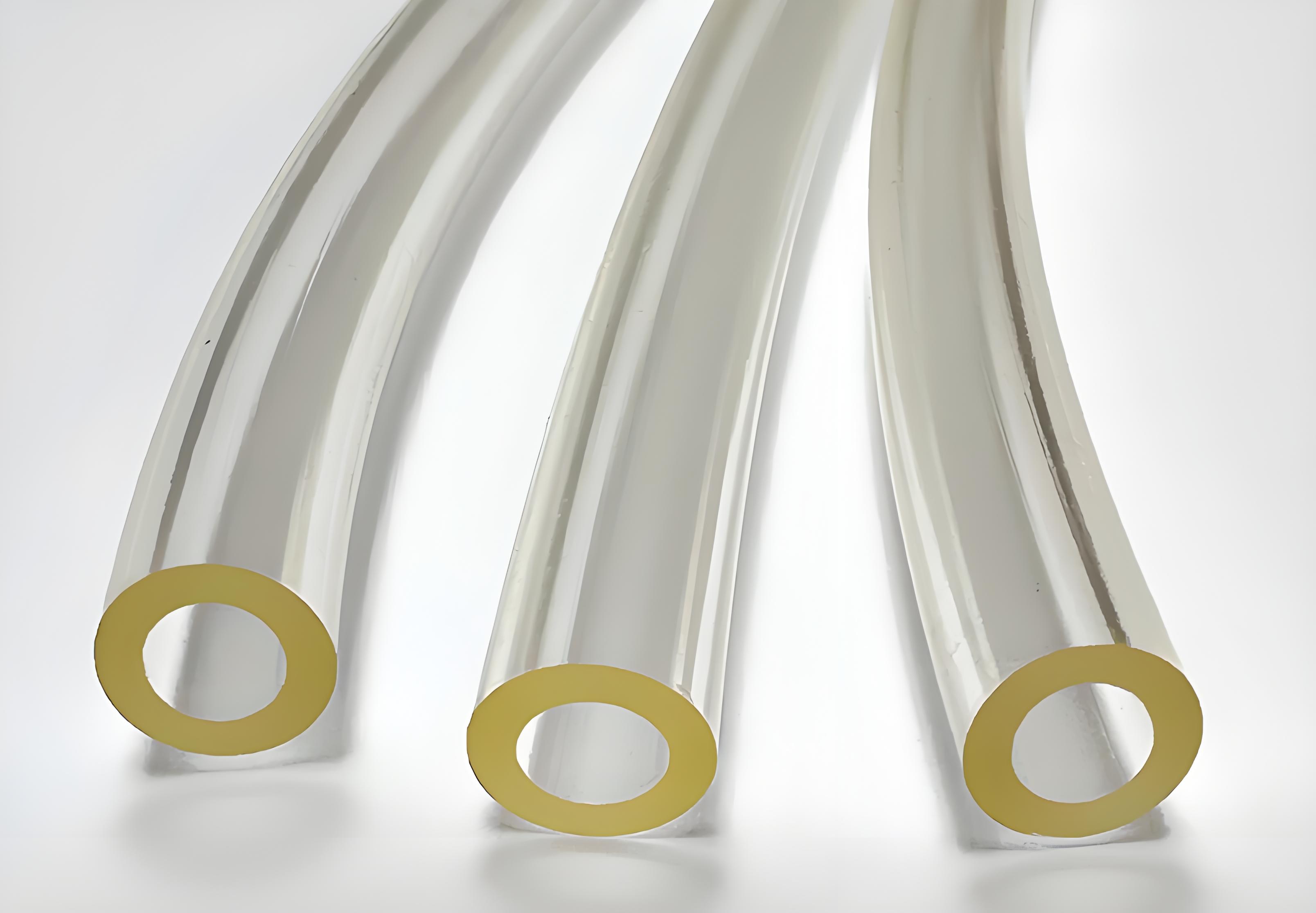
The Mistake: Assuming all TPU is a total gas barrier. While better than silicone, TPU still allows permeation of specific gases and vapors. In critical applications (CO2 lasers, anaesthesia lines, or refrigerant lines), this can be fatal.
The Data: Independent testing (ASTM D1434) shows that at 25°C, standard TPU allows CO2 permeation of approximately 350 cc·mm/(m²·day·atm). Nitrogen is much lower, but oxygen is around 140. For a 1-meter tube, this can mean 2-3% pressure loss per hour in a closed system.
The Fix: For barrier-critical uses, specify a multi-layer tube (TPU + EVOH or nylon liner). Alternatively, increase the wall thickness—permeation is inversely proportional to wall thickness. But note: extrusion of a thicker wall for a barrier is often more expensive than co-extrusion.
Practical Step: Talk to your supplier about the "permeation coefficient" of their specific compound. Generic supplier data is often inaccurate. Shanghai Xingen provides gas transmission rates per compound, not just per polymer class.
Across every failed application we studied, the root cause was not engineering ignorance but procurement pressure to accept the lowest quote. A supplier who cannot answer yes to "do you provide flex fatigue data, chemical immersion curves, and lot-specific tolerances?" is a liability. Shanghai Xingen distinguishes itself by publishing all of this data openly—not hiding it behind an NDA. Specifying TPU tubing is not about picking off a chart. It is about understanding the interaction of stress, environment, and time. When in doubt, ask for a prototype, test it under your exact conditions, and demand real numbers, not marketing fluff. Your machinery, your safety record, and your bottom line will thank you.