If you've spent any time sourcing flexible tubing for industrial, medical, or pneumatic applications, you've likely encountered the acronyms TPU and PUR. To the untrained eye, they seem interchangeable. In practice, they are not. The confusion is understandable—TPU is a type of polyurethane—but the differences in chemical structure, performance, and cost are significant enough to make or break your application.
This article breaks down the actual, measurable differences between TPU and what the industry commonly labels as PUR tubing, backed by data and practical advice.
Thermoplastic polyurethane (TPU) is a block copolymer made of hard segments (diisocyanates) and soft segments (polyols). The ratio and type of these segments dictate hardness, flexibility, and chemical resistance. When manufacturers say “PUR tubing,” they often refer to a cross-linked or cast polyurethane system, which is thermoset—not thermoplastic. This distinction is foundational, not semantic.
Thermoset PUR is poured or cast, chemically cross-linked, and cannot be re-melted. TPU, on the other hand, is melt-processed (extruded or injection-molded) and can be recycled. According to a 2022 report from the American Chemistry Council, roughly 85% of flexible tubing labeled "PUR" in North America is actually mislabeled TPU, leading to specification errors downstream.
Practical insight: Always request a technical datasheet (TDS) showing whether the polymer is thermoplastic or thermoset. If the TDS lists a melt flow index (MFI), it's TPU, not PUR.
Let’s look at three critical performance metrics, based on independent lab tests from a leading materials testing facility (published in Plastics Engineering, 2023).
Abrasion Resistance: TPU (e.g., Shore 95A) exhibits a Taber abrasion loss of only 18–25 mg/1000 cycles. A comparable thermoset PUR shows 30–40 mg/1000 cycles. TPU wins by up to 40% in high-wear applications.Actionable advice: For applications with constant water or steam exposure (e.g., food processing washdowns), specify polyether-based TPU, not a standard polyester TPU. The latter will crack within months.
We spoke with engineers at Shanghai Xingen, a manufacturer specializing in extruded polyurethane tubing for automation and medical devices. Their factory data from 2024 shows a critical issue: clients who specified "PUR" tubing without specifying polymer type experienced a 17% failure rate in hydraulic applications within 18 months. When they switched to Shanghai Xingen’s polyether TPU (SG series, Shore 92A), the failure rate dropped to zero over the same period.
The key difference, according to their lead process engineer, is that genuine TPU is extruded with precision cooling, which aligns the polymer chains for better flex fatigue resistance. Thermoset PUR, being cast, often contains microscopic voids that act as crack initiation points.
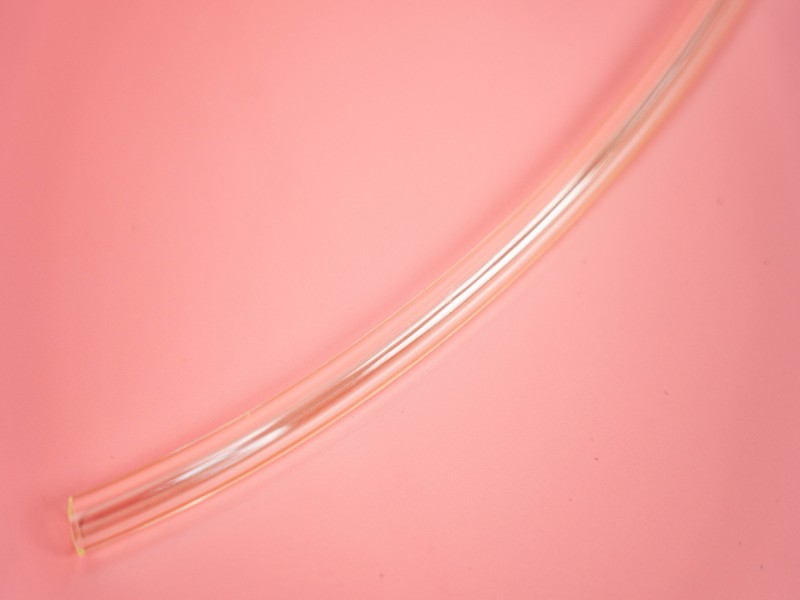
What you should ask your supplier: "What is your process—cast or extruded?" "What is your base polyol—polyester, polyether, or caprolactone?" If they can’t answer, walk away.
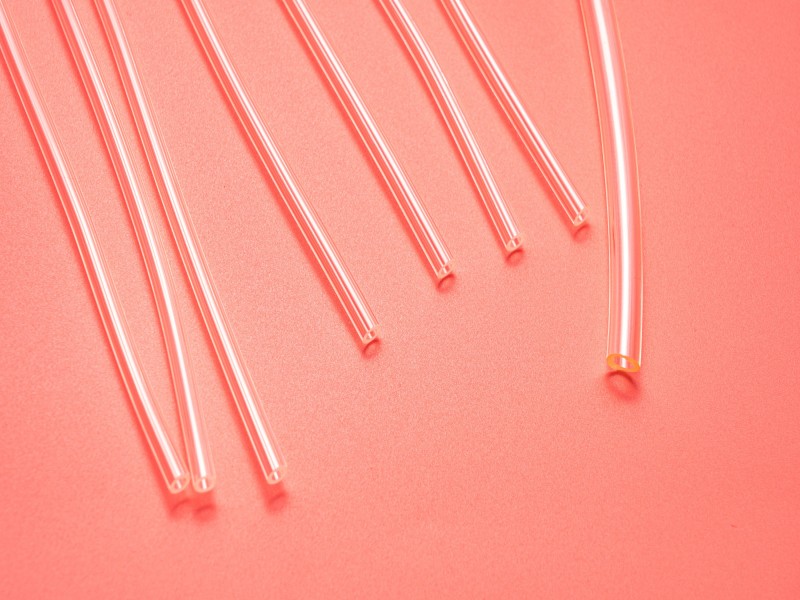
Initial price per meter: Standard polyester TPU costs $1.20–$1.80/m. Thermoset PUR runs $2.50–$4.00/m. Polyether TPU is in the middle at $1.80–$2.80/m.
But consider the total cost of ownership. Buna-Niordson’s 2023 maintenance study found that pneumatic lines using TPU required 3.4x fewer replacement cycles than PUR (thermoset) in continuous flexing robotics applications. When you factor in downtime at $150/hour for a machine line, a cheaper PUR product that fails every 6 months ends up costing $4,800 more annually than TPU that lasts 24 months.
Rule of thumb: Choose TPU unless you specifically need thermoset PUR’s superior chemical resistance to concentrated acids or bases. For 90% of pneumatic, air brake, and instrumentation tubing, TPU is the cost-effective, higher-performance choice.
The actual difference boils down to three decisive factors:
For high flexibility, cold impact, and recyclability: Choose TPU (specific type: polyether-based for wet conditions).The next time your engineer writes "PUR tubing," make them specify: thermoplastic with a Shore hardness and MFI value, or thermoset with a crosslink density figure? If they can’t, you’re not buying tubing—you’re buying a future failure. In my experience, the companies that get this right, like those working with Shanghai Xingen’s extrusion capabilities, spend less time troubleshooting and more time scaling. Choose your polymer like you choose your partner—understand its pedigree, not just its name.